
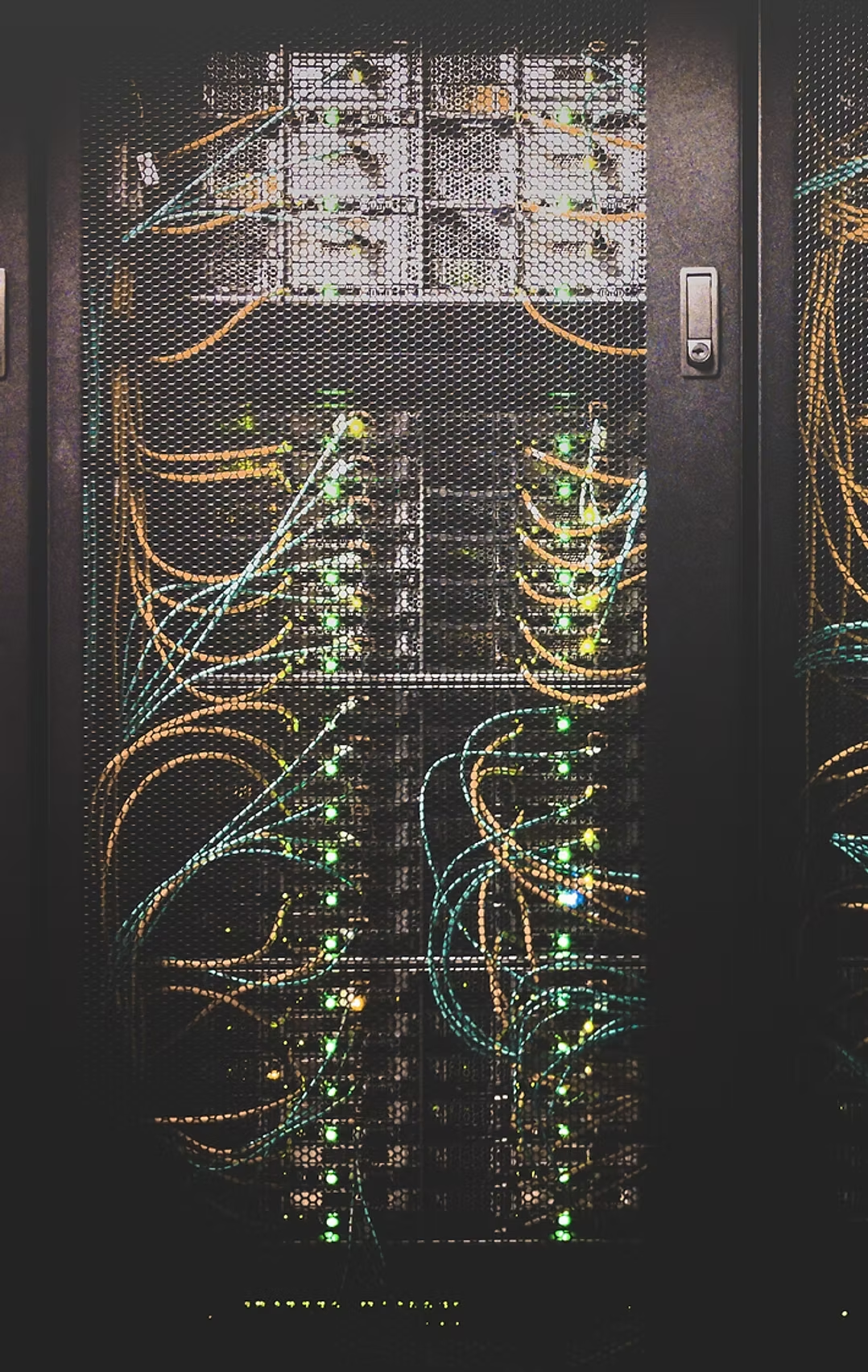
Recover your data centre's waste heat. No investment required.
EU regulation already requires data centres above 1 MW to assess waste heat recovery, and binding reuse targets are on the way. Calentix develops, delivers and operates the recovery system, and the heat is sold to the local district heating network under a long-term agreement. You contribute the heat. We do everything else.
Calentix is a heat producer. The fuel is your waste heat.
Your data centre already produces heat around the clock, today it is rejected into the atmosphere. Calentix captures it, upgrades it with industrial heat pumps, and sells it to the district heating network. Each project is set up as a dedicated project company that finances and owns the system, with Calentix leading development, delivery and operation. You keep full control of your operations and gain:
- 01
Zero capital investment
Heat pumps, heat exchangers, pipework and controls are financed and owned by the project company. No capex, no balance sheet impact for you.
- 02
ERF compliance made simple
Fully metered, auditable energy data for your annual ERF reporting under the EED and national regulations.
- 03
Lower cooling costs, better PUE
Heat reuse reduces cooling electricity demand, directly improving your PUE metrics.
- 04
Verified carbon reduction
Every MWh of recovered heat displaces fossil heat in the network. Documented for your ESG and Scope 3 reporting.
- 05
No impact on uptime
The system sits on the output side of your cooling infrastructure. Your cooling performance and SLA commitments are never affected.
What we need from you, and what you get back
We need
- 1.A cooling circuit interface, access to your liquid cooling loop, typically 25–35°C, at a defined isolation point.
- 2.Physical space, typically 1–4 shipping-container equivalents for the heat pump installation.
- 3.An electricity connection, usually 10–20% of the heat pump's thermal output; rarely a limiting factor given your existing infrastructure.
- 4.Read-only data access, temperature, flow rate and IT power draw, feeding our monitoring and your ERF calculation.
You get
- 1.Audit-ready compliance documentation for EED and national submissions (e.g. EnEfG/BfEE in Germany).
- 2.A stronger licence to operate, data centres that supply heat are seen as community assets, strengthening planning positions in urban locations.
- 3.A long-term, bankable structure, contracts run 15 years or more and are designed to withstand market and regulatory change.
- 4.One partner for everything, we handle engineering, permits, operations and the commercial relationship with the district heating company.
From first conversation to operational system
- 01
Pre-feasibility
2–4 weeksInitial screening of IT load, cooling configuration and district heating proximity. No commitment.
- 02
Feasibility study
8–16 weeksTechnical and commercial analysis. In parallel, we engage the district heating operator.
- 03
Agreements & investment decision
8–12 weeksSite agreement, Heat Purchase Agreement, permits and project financing are finalised, leading to the final investment decision.
- 04
Construction & commissioning
12–24 monthsInstallation, integration and testing with minimal disruption to your operations.
- 05
Operations
15+ yearsCalentix runs the system. You get ERF performance and ESG credentials without ongoing involvement.