
For the first time, EU primary legislation names data centres as a sector required to report energy use, notify district heating operators of available waste heat, and assess heat-recovery feasibility for new builds.
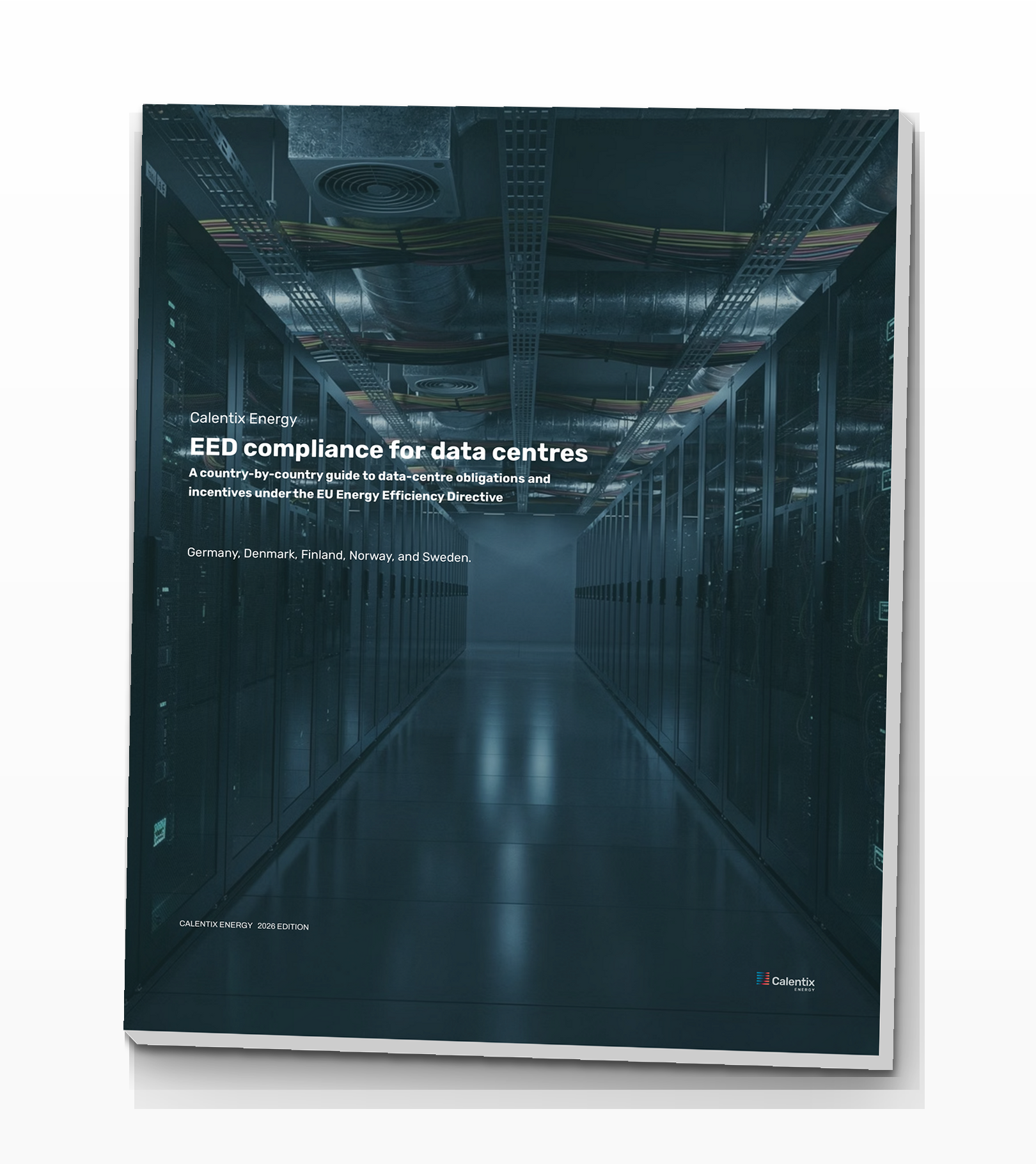
This 2026 guide walks through every Article 26 obligation under the recast Energy Efficiency Directive (EED 2023/1791) and shows how Germany, Denmark, Finland, Norway, and Sweden have each transposed those obligations into national law, including binding targets and incentives that go well beyond the EU floor.
Written for sustainability managers, compliance officers, and senior operations staff at data centres operating in the EU and EEA.
Fill out the form to get the guide in your inbox.
Get the guide in your inbox
What's inside
The EU framework
- Why the recast EED changes the regulatory picture for data centres
- Who is in scope: the 500 kW IT-load reporting threshold
- Article 26's four principal obligations: annual reporting, waste heat notification, cost-benefit assessment, public disclosure
- How the European data centre database works and what it makes visible to investors, customers, and authorities
Five country profiles
- Germany, EnEfG: binding ERF targets
- Denmark, strict cost-benefit integration with building permits
- Finland, heat market readiness and incentives for data centre operators
- Norway, EEA implementation, waste heat assessment requirements
- Sweden, transposition status, market opportunities
- A side-by-side country comparison table of thresholds, obligations and deadlines
Practical sections
- The feasibility study as a compliance gateway
- Turning compliance into competitive advantage
- Immediate, medium-term, and strategic action items
- Glossary: ERF, IHP, HPA, HAA, EnEfG, WPG, PUE, WUE
About the author
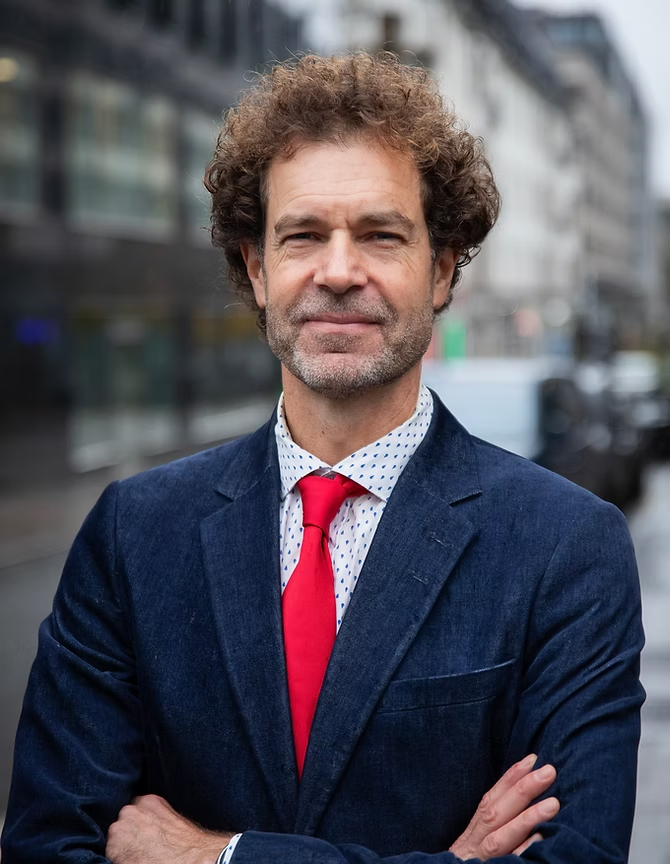
Markus Wråke — CEO of Calentix Energy. He spent nine years as CEO of Energiforsk, Sweden's leading energy research organisation, before joining Calentix to lead its work on turning data centre waste heat into a low-carbon energy source for district heating networks across Europe. He holds a PhD in economics and has built his career at the intersection of energy policy, research, and commercial development.
Frequently asked questions
Fill out the form to get the guide in your inbox.