← Back to resources
Regulatory guides

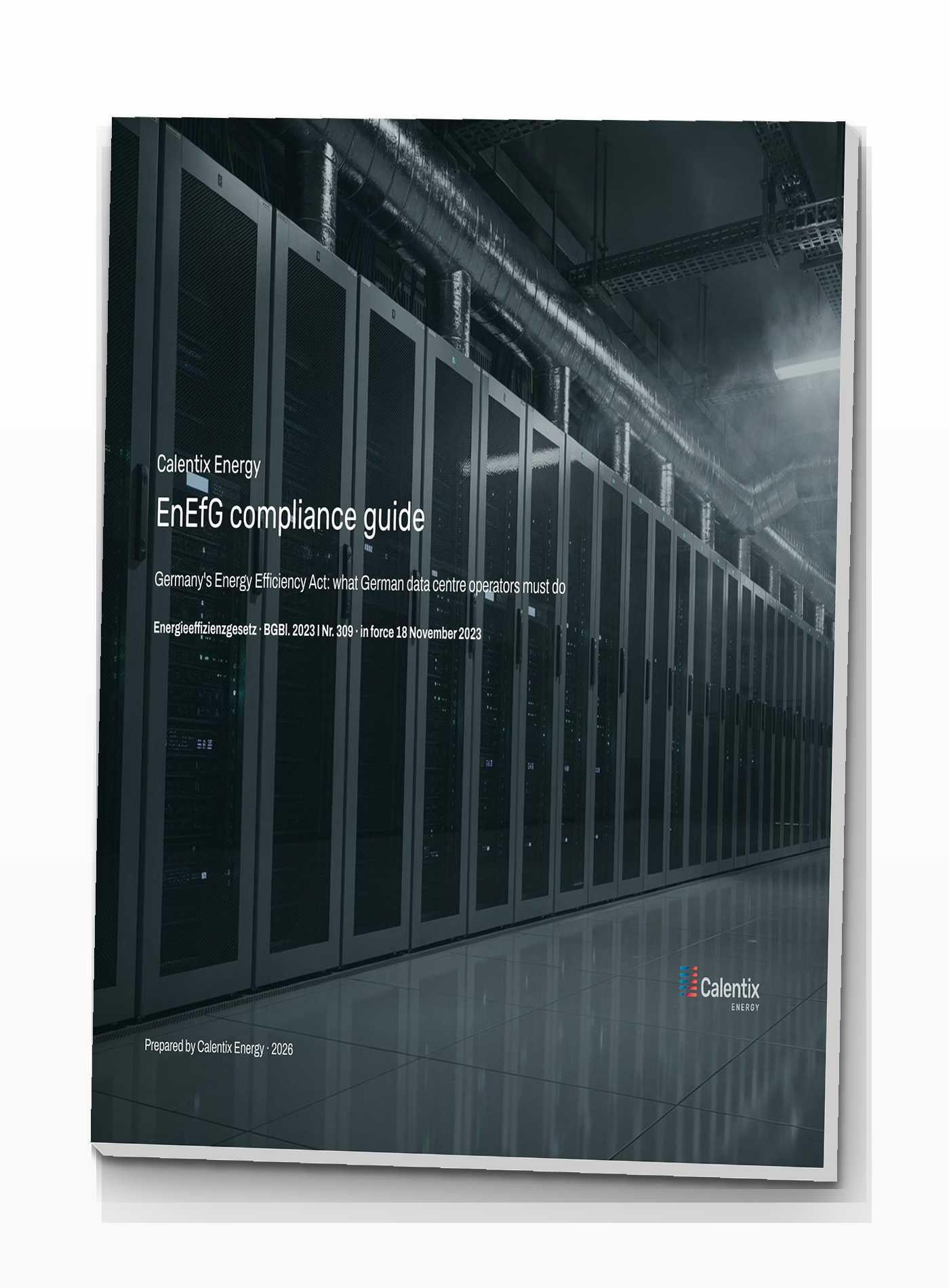
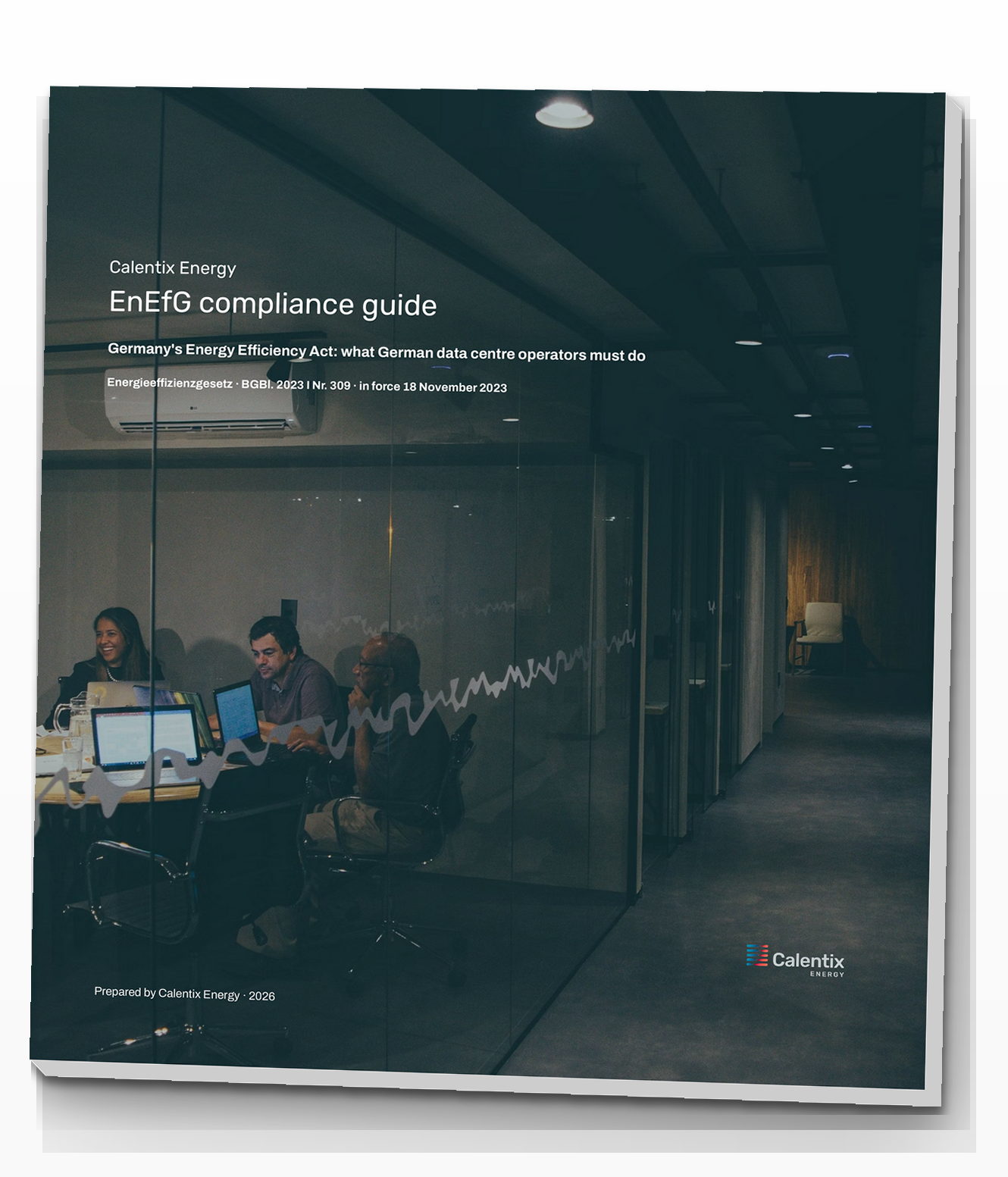
Free guide: Germany's Energy Efficiency Act explained for data centres (Energieeffizienzgesetz, EnEfG)

Free guide: Germany's Energy Efficiency Act explained for data centres (Energieeffizienzgesetz, EnEfG)

Germany's Energieeffizienzgesetz (EnEfG) sets the strictest data centre efficiency targets in Europe, and the deadlines start in 2025.

This 25-page guide walks through every obligation that applies to data centre operators, with direct paragraph references to the Act as published (BGBl. 2023 I Nr. 309), the exact PUE and ERF targets you need to hit, the energy management system rules taking effect on 1 July 2025, and the Anlage 3 reporting deadlines.

Fill out the form to get the guide in your inbox.

Get the guide in your inbox
What's inside

Scope and applicability

  • Who EnEfG applies to: the 300 kW "data centre" definition under § 3 Nr. 24
  • Capacity and energy thresholds that trigger each obligation
  • Obligations for IT operators with at least 50 kW capacity under § 12 Abs. 5

Core obligations

  • Binding PUE targets
  • Binding ERF targets
  • Annual public reporting by 31 March each year
  • Waste heat avoidance, notification, and reuse obligations
  • Penalties for non-compliance

Practical sections

  • A complete compliance timeline through 2030
  • Worked ERF calculation with realistic data centre numbers
  • ERF exemptions
  • How EnEfG aligns with the EU's upcoming Minimum Performance Standards
  • A section-by-section compliance checklist (Sections A–G)
Free guide: Germany's Energy Efficiency Act explained for data centres (Energieeffizienzgesetz, EnEfG) – What's inside

About the author

Markus Wråke

Markus Wråke — CEO of Calentix Energy. He spent nine years as CEO of Energiforsk, Sweden's leading energy research organisation, before joining Calentix to lead its work on turning data centre waste heat into a low-carbon energy source for district heating networks across Europe. He holds a PhD in economics and has built his career at the intersection of energy policy, research, and commercial development.

Frequently asked questions

Germany's Energy Efficiency Act, published in BGBl. 2023 I Nr. 309 and in force since 18 November 2023. It transposes the EU Energy Efficiency Directive into German law and goes further by imposing binding energy efficiency and waste heat reuse targets specifically on data centre operators.

Any structure or group of structures whose primary purpose is the centralised hosting, connection, and operation of IT and telecommunications equipment, with a non-redundant installed electrical capacity of at least 300 kW (§ 3 Nr. 24). Network nodes that don't perform substantial data processing are excluded.

Data centres operational before 1 July 2026 must achieve an annual-average PUE of ≤ 1.5 from 1 July 2027 and ≤ 1.3 from 1 July 2030 (§ 11 Abs. 1). Data centres commissioned on or after 1 July 2026 must achieve a PUE of ≤ 1.2 from day one (§ 11 Abs. 2).

The ERF (per DIN EN 50600-4-6) applies to data centres commissioned on or after 1 July 2026: ≥ 10% from 1 July 2026, ≥ 15% from 1 July 2027, and ≥ 20% from 1 July 2028 (§ 11 Abs. 2). Existing data centres have no ERF target under § 11, but §§ 16 and 17 still impose general waste heat obligations.

All operators must implement an ISO 50001 or EMAS energy management system by 1 July 2025 (§ 12 Abs. 1). Data centres with ≥ 1 MW non-redundant capacity (and publicly owned DCs ≥ 300 kW) must have the system validated or certified by 1 January 2026 (§ 12 Abs. 3). Exemption applies where ≥ 50% of waste heat is fed into a district heating network and annual energy use is below 7.5 GWh (§ 12 Abs. 4).

By 31 March each year, all operators must publish and submit Anlage 3 data for the previous calendar year (§ 13 Abs. 1): total electricity consumption, share of renewables, PUE, ERF, cooling system efficiency, WUE, and the quantity and temperature of waste heat discharged.

Penalties are set out in § 19. Fines can be imposed for failing to meet PUE or ERF targets, failing to implement or certify the energy management system, failing to submit Anlage 3 reports, or failing to comply with waste heat obligations under §§ 16 and 17.

Yes, § 11 Abs. 3 lists three grounds: (1) exceptional events outside the operator's control; (2) a binding agreement with a district heating network operator or municipality to accept the heat within ten years; (3) refusal by the heat network operator to accept a waste heat offer at cost price within six months, provided the DC has the necessary delivery infrastructure in place.

Under an Independent Heat Producer (IHP) arrangement, a specialised developer such as Calentix Energy sets up a dedicated project company that finances, builds, owns, and operates the heat recovery infrastructure and sells the recovered heat to a district heating network. The data centre signs a Heat Access Agreement (HAA) and achieves ERF compliance at zero capex.

Yes, and it leads it. In October 2025, the European Commission's Second Technical Assessment under Delegated Regulation (EU) 2024/1364 recommended binding Minimum Performance Standards for all EU data centres. The proposed thresholds align directly with EnEfG § 11.
Tags:data centresguidesEnEfGcompliance

Fill out the form to get the guide in your inbox.

Get the guide in your inbox